
Ever wondered what exactly goes into your hair color or why some dyes last longer than others? Here are some intriguing and practical insights about hair dyes that might surprise even seasoned hair enthusiasts!
1. Permanent vs. Semi-Permanent: More Than Just Longevity
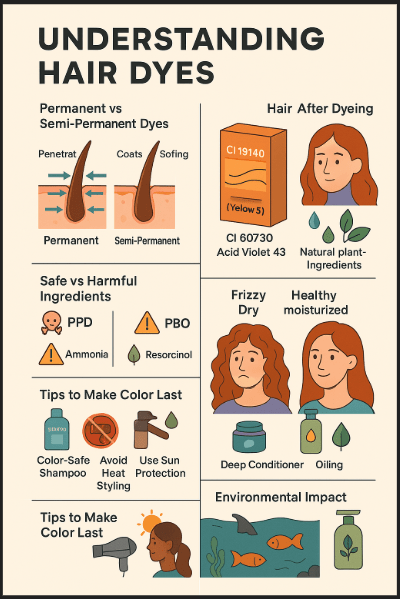
Did you know permanent dyes penetrate deep inside your hair by opening up your hair’s cuticles with ammonia and hydrogen peroxide? That’s why they cover grays so effectively but also why they’re harsher on your strands. Semi-permanent dyes, on the other hand, gently coat your hair without penetrating too deeply, making them less damaging but short-lived.
2. Those Mysterious Color Codes Explained (CI Numbers)
Ever seen a hair dye box with “CI 19140” or “CI 60730” and wondered what they mean? These are Color Index (CI) numbers that clearly identify dyes. CI 19140, for instance, is Tartrazine (Yellow 5), known for vivid yellows but also as a potential allergen. CI 60730, Acid Violet 43, is the secret behind your purple shampoo that neutralizes brassy tones.
CI numbers fall into different categories:
- Synthetic Dyes: Chemically derived, often petroleum-based, offering vibrant, long-lasting colors but higher risk of allergic reactions or sensitivities.
- Natural Dyes: Derived from plants, minerals, or other natural sources, usually gentler and less likely to cause allergies. However, color intensity may be less vibrant or shorter-lasting compared to synthetics.
3. Hair Dye Ingredients Can Affect Your Health
Ingredients like Paraphenylenediamine (PPD), common in darker permanent dyes, can cause severe allergic reactions. Always doing a patch test 48 hours beforehand isn’t just precautionary—it’s crucial! Surprisingly, some “natural” dyes contain insects—CI 75470 (Cochineal) comes from crushed beetles, giving products a natural red tint.
4. Expired Hair Dye: Why Risking It Isn’t Worth It
Expired dyes don’t just lose potency—they become chemically unstable. They can cause unexpected color results, uneven application, or even severe scalp reactions. Check your dye for odd smells, leaks, or separation—clear signs it’s time to let go.
5. Clever Tricks to Make Your Hair Color Last Longer
Want vibrant hair longer? Beyond color-safe shampoos, avoid washing your hair too often. Excess water and heat styling are your dye’s worst enemies. Regularly use deep conditioners, keep heat-styling minimal, and always protect hair from the sun and chlorinated pools.
6. Hidden Environmental Impact
Did you know rinsing hair dye down the drain impacts aquatic life? Certain synthetic dyes break down slowly and pollute waterways. Opting for dyes with fewer harmful chemicals isn’t just healthier for you—it also helps protect the environment.
7. Healthy Hair Practices BEFORE Coloring
Avoid washing your hair right before coloring—it removes natural oils that protect your scalp from irritation. Skip heavy styling products to let the dye penetrate evenly.
8. Surprising pH Role in Hair Dyeing
The effectiveness of your dye heavily depends on its pH. Higher alkaline levels (found in permanent dyes) raise the hair cuticle, helping color molecules enter deeply, but at the expense of hair health, causing potential damage and brittleness.
9. Why Does Hair Become Dry and Frizzy After Dyeing?
Hair dyeing, especially with permanent dyes, strips natural moisture and oils, weakening the hair structure. The chemicals in dyes lift cuticles, leaving strands vulnerable to dryness, breakage, and frizz. That’s why aftercare, including deep conditioning and moisturizing treatments, is essential.
10. How to Identify Safe CI Numbers:
When selecting hair dyes, consider:
- EU and FDA approved lists: Ensure products comply with regulations, controlling dye concentration for safe usage.
- Avoid controversial dyes: Skip CI 19140 (Tartrazine) if you have sensitive skin or known allergies.
- Patch test: Always conduct an allergy test 48 hours before using a new dye.
11. How to Select a Safe Dye: What to Look For
- Choose dyes clearly labeling all ingredients, including CI numbers.
- Prefer dyes marked as hypoallergenic or dermatologically tested.
- Select products free from ammonia, PPD, and resorcinol if you have sensitive skin.
- Look for brands offering natural or plant-based ingredients, as they are typically gentler.
12. Hair Dye Side Effects You Shouldn’t Ignore
Continuous use of hair dye can lead to a range of issues including hair damage, as the harsh chemicals strip natural oils, leaving strands dry, brittle, and prone to breakage. Over time, frequent dyeing can also cause color build-up, resulting in uneven tones, dullness, or muddy hues that are hard to correct. Additionally, repeated chemical exposure weakens the hair shaft and follicles, potentially leading to thinning or increased hair loss. The scalp may also become more sensitive or develop allergic reactions, especially to ingredients like PPD or ammonia, even if previous applications were trouble-free. Beyond surface effects, prolonged absorption of chemical compounds through the scalp raises concerns about chemical overload and its possible long-term health implications.
Next time you color your hair, you’ll not only understand what’s happening but also appreciate the science and considerations behind every vibrant shade!
 bdazlai - blog
Leave a comment