
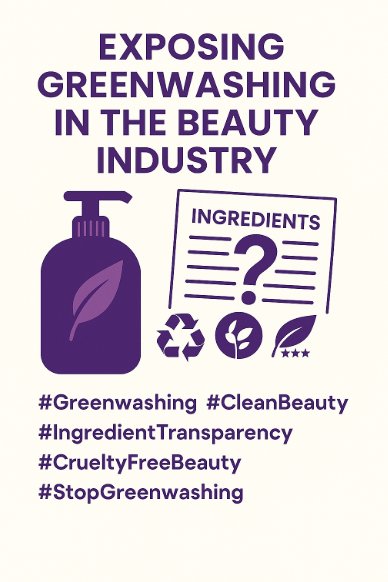
In today’s beauty industry, terms like “natural,” “clean,” and “eco-friendly” are everywhere. But how many of these claims are genuine? Greenwashing—a deceptive marketing practice—has become rampant, making it challenging for consumers to discern truly sustainable products from those merely posing as such.
🧼 What Does Greenwashing Look Like?
1. Buzzwords Without Backing:
Terms like “natural,” “organic,” and “non-toxic” are often used without any standardized definitions or certifications. A product labeled “natural” might still contain synthetic preservatives or fragrances.
2. Highlighting One Good, Hiding the Bad:
Brands may advertise being “paraben-free” or “vegan,” yet still include harmful ingredients like synthetic fragrances, silicones, or microplastics. For instance, a product might boast about containing rose water but have it as the last ingredient, with the rest being synthetic fillers.
3. Misleading Symbols & Faux Certifications:
Some products display eco-style icons or text like “eco certified” without real third-party verification. These self-created logos can mislead consumers into believing a product is certified when it’s not.
4. Sustainable Packaging, Unsustainable Formulas:
A shampoo might come in a recyclable bottle but contain sulfates, PEGs, or petroleum-derived polymers, negating the environmental benefits of its packaging.
5. Emphasizing One Good Ingredient:
Marketing phrases like “Infused with rose water” can be misleading if the product is 95% water and full of synthetic fillers.
🐰 Recognizing Misleading Symbols
Common Misleading Symbols:
- ✅ Green leaf or tree icon: Suggests nature or biodegradability but isn’t a certification.
- ♻️ Recyclable triangle without certification code: Implies recyclability but may not be recyclable in local systems.
- 🐇 “Cruelty-Free” bunny logo (not Leaping Bunny or PETA): Looks legitimate but isn’t verified unless it’s one of the official ones.
Verified Third-Party Logos to Trust:
- Leaping Bunny: Global gold standard for cruelty-free products.
- ECOCERT: Certified organic cosmetics.
- COSMOS: European organic and natural standards.
- USDA Organic: For truly organic formulations.
- Certified Vegan (by Vegan.org): Ensures products are free from animal-derived ingredients.
🌿 Why It Matters
Consumer Deception:
People seeking healthier, more ethical choices are misled into buying products that don’t align with their values.
Health Risks:
Sensitive populations, like pregnant women or teens, may unknowingly use harmful products.
Environmental Impact:
Microplastics and persistent ingredients enter water systems, causing long-term ecological damage.
Erosion of Trust:
Truly ethical and sustainable brands suffer from skepticism due to widespread greenwashing.
✅ How to Spot and Avoid Greenwashing
- Read the Ingredient List (INCI): Look beyond the front label and scrutinize the actual ingredients.
- Avoid Vague Claims: Be cautious of terms like “natural” without a certifying body.
- Check for Real Certifications: Look for logos from reputable organizations like Leaping Bunny or ECOCERT.
- Be Wary of Unverified Symbols: Symbols without backing organizations can be misleading.
- Use Tools for Verification: Utilize platforms like Bdazlai to scan and decode product ingredients.
🔍 bdazlai: Your Ally Against Greenwashing
At bdazlai, we champion ingredient transparency and ethical beauty. Our platform:
- Scans Labels: Decodes complex INCI names.
- Highlights Safe Products: Identifies items free from microplastics, endocrine disruptors, and greenwashed claims.
- Offers Filters: Allows you to search for certified vegan, cruelty-free, plastic-free, and pregnancy-safe options.
We’re committed to building a world where beauty is backed by science, ethics, and sustainability.
📚 Further Reading
For more insights into hidden ingredients in beauty products, read our detailed article on microplastics in skincare and haircare:
The Plastic You Can’t See: Microplastics in Skincare and Haircare Products
 bdazlai - blog
Leave a comment