Tag: hairhealthmatters

  • How to Identify Your Hair Type and Suitable Hair Care🧐

    Hair type is based on texture, thickness, and oil production. Here’s a quick guide:
    πŸ”Ή Fine Hair – Thin, delicate strands that often appear flat and get oily quickly.
    πŸ”Ή Thick Hair – Denser strands that can feel heavy and require more hydration.
    πŸ”Ή Curly Hair – Forms natural waves or curls, prone to dryness and frizz.
    πŸ”Ή Oily Hair – Produces excess oil, leading to greasy roots.
    πŸ”Ή Dry or Damaged Hair – Lacks moisture, often from heat styling, coloring, or environmental factors.


    How to Choose the Right Shampoo, Conditioner & Hair Mask 🧴


    For Fine Hair 🌬️
    Shampoo: Look for volumizing and lightweight formulas. Avoid heavy oils and silicones that can weigh down your hair.
    Conditioner: Use a lightweight, detangling formula, focusing only on the ends to prevent greasiness.
    Hair Mask: Choose protein-based masks to strengthen strands without making them limp. Apply once a week.
    Best Ingredients: Biotin, keratin, panthenol, rice protein.
    Avoid: Heavy oils like coconut oil, silicones, sulfates.


    For Thick Hair πŸ’ͺ
    Shampoo: Use moisturizing and smoothing shampoos to control frizz and nourish your hair.
    Conditioner: A deeply hydrating conditioner will help soften and manage your hair.
    Hair Mask: Creamy, rich masks with butters and oils work well to hydrate thick hair. Use 1–2 times a week.
    Best Ingredients: Shea butter, argan oil, glycerin, keratin.
    Avoid: Lightweight shampoos (they may not provide enough moisture).


    For Curly Hair 🌊
    Shampoo: Opt for sulfate-free, hydrating shampoos that won’t strip natural oils.
    Conditioner: A rich, creamy conditioner with slip helps detangle and define curls.
    Hair Mask: Look for intensive hydration masks with butters and oils to keep curls soft and bouncy.
    Best Ingredients: Coconut oil, avocado oil, aloe vera, honey.
    Avoid: Sulfates, alcohol-based products that dry out curls.


    For Oily Hair πŸ’¦
    Shampoo: Use a clarifying shampoo to remove excess oil without over-drying.
    Conditioner: Apply a light conditioner only on the ends to avoid buildup.
    Hair Mask: Use a scalp-purifying mask with clay or charcoal once a week to control oil.
    Best Ingredients: Tea tree oil, witch hazel, charcoal, peppermint.
    Avoid: Heavy oils, thick creamy formulas.


    For Dry/Damaged Hair πŸ”₯
    Shampoo: Use moisture-rich, sulfate-free shampoos to prevent further damage.
    Conditioner: Deep conditioning is a must! Look for protein and oil-infused formulas.
    Hair Mask: Repairing masks with keratin and oils help restore strength. Use 1–2 times weekly.
    Best Ingredients: Argan oil, keratin, castor oil, collagen.
    Avoid: Sulfates, drying alcohols, excessive heat styling.
    Final Thoughts πŸ’‘
    Finding the right products for your hair type can make a huge difference in hydration, strength, and manageability. No more guessingβ€”tailor your routine and let your hair thrive!

    What’s your hair type, and which products have worked best for you? Share in the comments! Don’t forget to follow us for more haircare tips. βœ¨πŸ’†β€β™€οΈπŸ’–

  • Hair Porosity – What It Is & How to Find Yours

    If you’ve ever wondered why some hair products work wonders for others but leave your hair feeling dry, greasy, or lifeless, the answer might be hair porosity! Understanding your hair porosity is the key to choosing the right products, retaining moisture, and keeping your hair healthy.


    What is Hair Porosity? 🧐
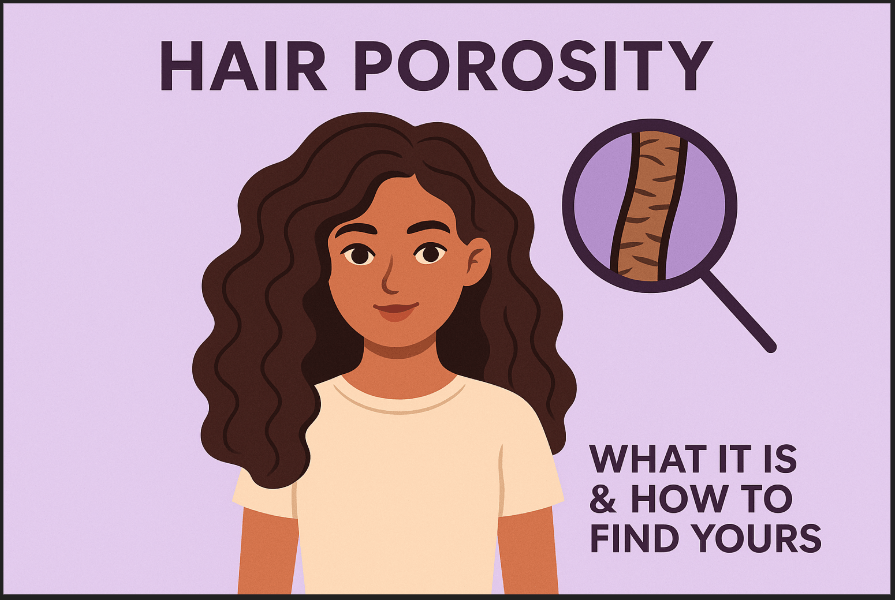
    Hair porosity refers to your hair’s ability to absorb and retain moisture. It depends on how open or closed your hair cuticles (the outer layer of your hair) are. There are three types of hair porosity:
    Low Porosity – Cuticles are tightly packed, making it difficult for moisture to penetrate. Hair takes longer to absorb products but also retains moisture well once it’s in.
    Medium/Normal Porosity – Cuticles are slightly raised, allowing just the right amount of moisture in and out. Hair stays hydrated and holds styles well.
    High Porosity – Cuticles are widely open or damaged, causing hair to absorb moisture quickly but lose it just as fast. This can lead to frizz, dryness, and breakage.


    How to Find Out Your Hair Porosity πŸ”
    Here are three easy ways to test your hair porosity at home:

    The Water Test πŸ’¦
    Take a clean, dry strand of hair and drop it into a glass of water.
    If it floats – You have low porosity hair (resistant to water).
    If it sinks slowly – You have medium porosity hair (ideal balance).
    If it sinks quickly – You have high porosity hair (absorbs too much water).

    The Spray Test 🌊
    Mist a small section of dry hair with water.
    If the water beads up on the surface, you have low porosity hair.
    If it absorbs after a few seconds, you have medium porosity hair.
    If it soaks in instantly, you have high porosity hair.
    How to Care for Your Hair Based on Porosity πŸ’–


    🌱 Low Porosity Hair:
    Use lightweight, water-based products.
    Apply heat (like a warm towel) when deep conditioning to help products penetrate.
    Avoid heavy oils and butters, which can sit on top and cause buildup.
    πŸ’§ Medium Porosity Hair:
    Use a balanced mix of moisture and protein treatments.
    Stick to lightweight creams and oils that nourish without weighing the hair down.
    Regular conditioning keeps hair healthy and manageable.
    πŸ”₯ High Porosity Hair:
    Use rich, creamy leave-ins and deep conditioners.
    Seal moisture with heavier oils (like shea butter or castor oil).
    Avoid excessive heat styling and chemical treatments, as they can further damage hair.

    • Final Thoughts πŸ’‘
      Knowing your hair porosity is a game-changer for finding the right hair products and routines! Instead of guessing what works, tailor your haircare to your porosity type and enjoy healthier, more manageable hair.

    Have you tested your hair porosity yet? Share your results in the comments! Don’t forget to follow us for more haircare tips. βœ¨πŸ’†β€β™€οΈπŸ’–