
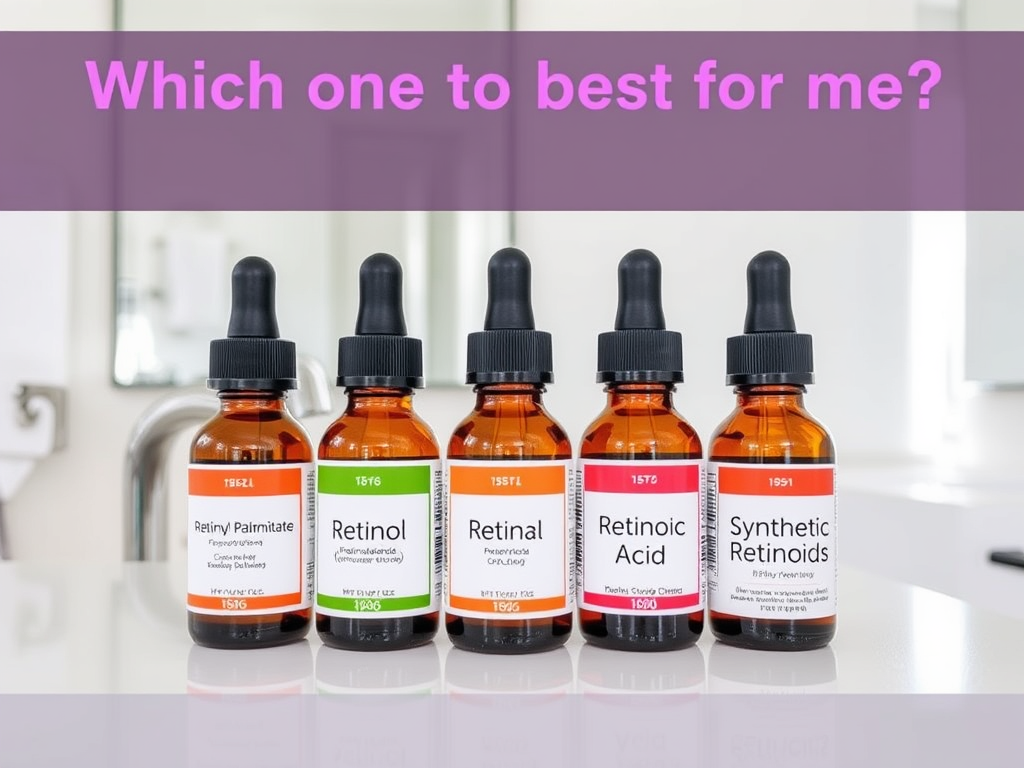
Retinoids are one of the most powerful and widely researched ingredients in skincare, known for their incredible ability to combat acne, signs of aging, and improve overall skin texture. But with different types of retinoids available, choosing the right one for your skin can be confusing. This guide will help you understand the retinoid family and their varying strengths so you can select the best option for your needs.
What Are Retinoids?
Retinoids are derivatives of Vitamin A that work by increasing cell turnover, promoting collagen production, and reducing acne formation. They help improve skin texture, reduce fine lines, and fade hyperpigmentation. However, not all retinoids are created equal—some are gentler, while others are prescription-strength and highly potent.
To simplify things, let’s break down the Retinoid Family from the least potent to the most powerful.
- Retinyl Palmitate: The Mildest Option 🍰
✅ Best for: Beginners and those with sensitive skin. ✅ Potency: Least potent form of retinoid, requires multiple conversions to become active in the skin. ✅ Benefits: Gentle, less irritating, great for introducing retinoids into your routine.
💡 Tip: If you’re new to retinoids and have sensitive skin, start with Retinyl Palmitate before moving to stronger forms. - Retinal (Retinaldehyde): One Step Closer to Power 🍒
✅ Best for: Faster results in anti-aging and acne treatment. ✅ Potency: More potent than Retinol, only one conversion away from active Retinoic Acid. ✅ Benefits: Works faster than retinol, reduces wrinkles, and improves skin texture effectively.
💡 Tip: If you’ve already used Retinol and want to level up your routine, Retinal is a great choice. - Retinol: The Popular OTC Choice 🧁
✅ Best for: Anti-aging, acne, and general skin renewal. ✅ Potency: Mildly potent, needs to be converted into Retinoic Acid by the skin. ✅ Benefits: Reduces fine lines, improves skin texture, and clears pores over time.
💡 Tip: Retinol is widely available in over-the-counter (OTC) products. Start with a low concentration (0.3%-0.5%) and work your way up to 1%. - Retinoic Acid: The Prescription Powerhouse 🍰
✅ Best for: Severe acne, deep wrinkles, and advanced anti-aging. ✅ Potency: Most potent natural retinoid, does not require conversion—works immediately. ✅ Benefits: Faster skin renewal, collagen boost, and stronger acne-fighting properties.
💡 Tip: Available only through prescription (Tretinoin, Retin-A). It can cause dryness and irritation, so use with a moisturizer and start slow. - Synthetic Retinoids: Lab-Designed for Enhanced Effects 🍫
✅ Best for: Acne, severe sun damage, and those who cannot tolerate traditional retinoids. ✅ Potency: Highly potent, specially formulated for enhanced stability and effects. ✅ Examples:
Adapalene (Differin) – Available OTC, great for acne with fewer irritation risks.
Tazarotene (Tazorac) – Prescription-only, stronger than Tretinoin.
Trifarotene – A newer prescription retinoid used for acne and anti-aging.
💡 Tip: If you’ve struggled with irritation from traditional retinoids, Adapalene is a great starting point.
How to Use Retinoids Safely
While retinoids offer amazing benefits, they can also cause dryness, peeling, and sensitivity. Here are some tips to use them effectively:
✔ Start Slow: Begin with a low concentration and gradually increase usage.
✔ Use at Night: Retinoids break down in sunlight, so apply them in your nighttime routine.
✔ Always Use Sunscreen: Retinoids make the skin more sensitive to UV damage—never skip SPF.
✔ Moisturize Well: Pair with hydrating ingredients like hyaluronic acid and ceramides.
✔ Avoid Mixing with Harsh Actives: Don’t use with AHAs, BHAs, or Vitamin C in the same routine.
Final Thoughts
The Retinoid Family offers solutions for all skin types and concerns, from beginners looking for gentle options to advanced users needing prescription-strength results. Understanding the strengths and functions of each retinoid will help you make an informed decision and build an effective skincare routine.
🌿 Which retinoid have you used? Share your experience in the comments below!
 bdazlai - blog