
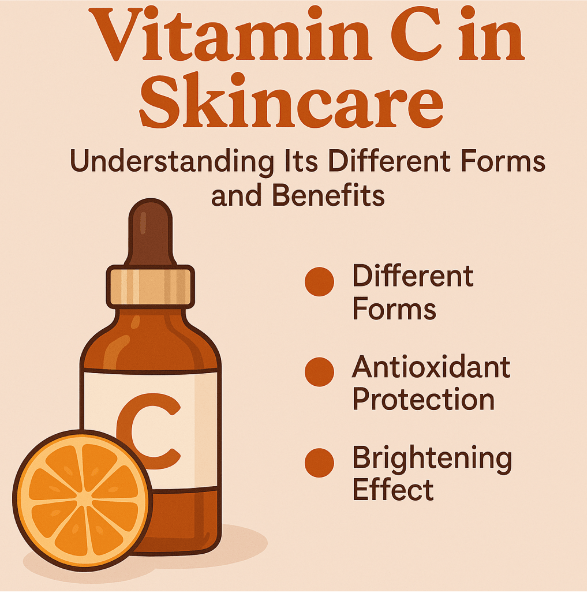
Vitamin C is a powerhouse ingredient in skincare, known for its brightening, antioxidant, and collagen-boosting properties. However, not all Vitamin C formulations are created equal! The image above breaks down the different types of Vitamin C and their unique benefits, helping you make an informed choice for your skincare routine.
The Star: Ascorbic Acid 🌟
Ascorbic acid, also known as L-ascorbic acid, is the purest and most potent form of Vitamin C. It is widely celebrated for:
Strong antioxidant protection – Neutralizes free radicals and protects against environmental damage.
Skin brightening – Helps fade dark spots and hyperpigmentation.
Collagen stimulation – Supports skin elasticity and reduces fine lines.
The downside? Ascorbic acid is unstable and oxidizes quickly, meaning it can lose its effectiveness if not stored properly. It also works best at a low pH, which might be too harsh for sensitive skin.
Vitamin C Derivatives: Gentler & More Stable Alternatives
Since ascorbic acid can be tricky to formulate, many brands use Vitamin C derivatives that are more stable and gentler on the skin.
These derivatives offer unique benefits:
Sodium Ascorbyl Phosphate (SAP) 🛡️ – A water-soluble form of Vitamin C that is known for its antioxidant and acne-fighting properties. It converts into ascorbic acid on the skin and is much more stable than pure Vitamin C.
Magnesium Ascorbyl Phosphate (MAP) 💧 – A hydrating and stable derivative that helps brighten the skin while being gentle enough for sensitive skin types.
Tetrahexyldecyl Ascorbate (THD Ascorbate) 🌿 – An oil-soluble form of Vitamin C that penetrates deeper into the skin, making it highly effective for collagen production and reducing hyperpigmentation.
Ascorbyl Glucoside 🌊 – A mild and stable form of Vitamin C that gradually converts to ascorbic acid, making it suitable for sensitive skin.
Ascorbyl Tetraisopalmitate ✨ – An oil-soluble derivative that works well for moisturizing the skin while delivering brightening benefits.
3-O-Ethyl Ascorbic Acid ❓ – A relatively new derivative with promising antioxidant and brightening effects, but more research is needed to confirm its full benefits.
Choosing the Right Vitamin C for Your Skin 🧴
For sensitive skin – Opt for MAP, THD Ascorbate, or Ascorbyl Glucoside for a gentle yet effective glow.
For oily or acne-prone skin – SAP is a great choice due to its ability to fight breakouts while brightening the skin.
For deep penetration and long-term benefits – THD Ascorbate and Ascorbyl Tetraisopalmitate are excellent as they are oil-soluble and absorb well into the skin.
For maximum potency – If your skin can tolerate it, ascorbic acid in a well-formulated serum (with ferulic acid and vitamin E) will deliver the most powerful results.
Final Thoughts
Vitamin C is a must-have in any skincare routine, but choosing the right type for your skin concerns is key! Whether you go for pure ascorbic acid or a gentler derivative, incorporating Vitamin C can brighten your complexion, protect against environmental damage, and boost collagen for youthful skin.
| Vitamin C Type | Solubility | Stability | Key Benefits | Best For |
|---|---|---|---|---|
| Ascorbic Acid (L-Ascorbic Acid) | Water-soluble | Low (oxidizes easily) | Brightens skin, reduces hyperpigmentation, boosts collagen, strong antioxidant | Normal to oily skin, not ideal for sensitive |
| Sodium Ascorbyl Phosphate (SAP) | Water-soluble | High | Antioxidant, fights acne, brightens skin, converts to ascorbic acid | Oily/acne-prone, sensitive skin |
| Magnesium Ascorbyl Phosphate (MAP) | Water-soluble | High | Hydrating, brightening, gentle antioxidant | Dry, sensitive, and mature skin |
| Tetrahexyldecyl Ascorbate (THD Ascorbate) | Oil-soluble | Very High | Deep penetration, collagen support, reduces pigmentation | All skin types, including sensitive |
| Ascorbyl Glucoside | Water-soluble | High | Mild brightening, antioxidant, suitable for sensitive skin | Sensitive skin, daily use |
| Ascorbyl Tetraisopalmitate | Oil-soluble | High | Moisturizing, brightens, antioxidant, improves skin texture | Dry and sensitive skin, anti-aging focus |
| 3-O-Ethyl Ascorbic Acid | Water-soluble | Moderate to High | Brightening, antioxidant, possibly anti-inflammatory (research still growing) | All skin types, especially uneven tone |
💡 Pro Tip: Always use it in the morning, pair Vitamin C with sunscreen ☀️ to maximize its benefits and prevent oxidation on the skin!
Have you tried any of these Vitamin C forms? Which one works best for you? Let us know in the comments! And don’t forget to follow us for more skincare insights! ✨😊


 bdazlai - blog